Double Bed Knitting Machine: 5 Powerful Picks You’ll Love 2025
Why Double Bed Knitting Machines Transform Your Crafting Experience
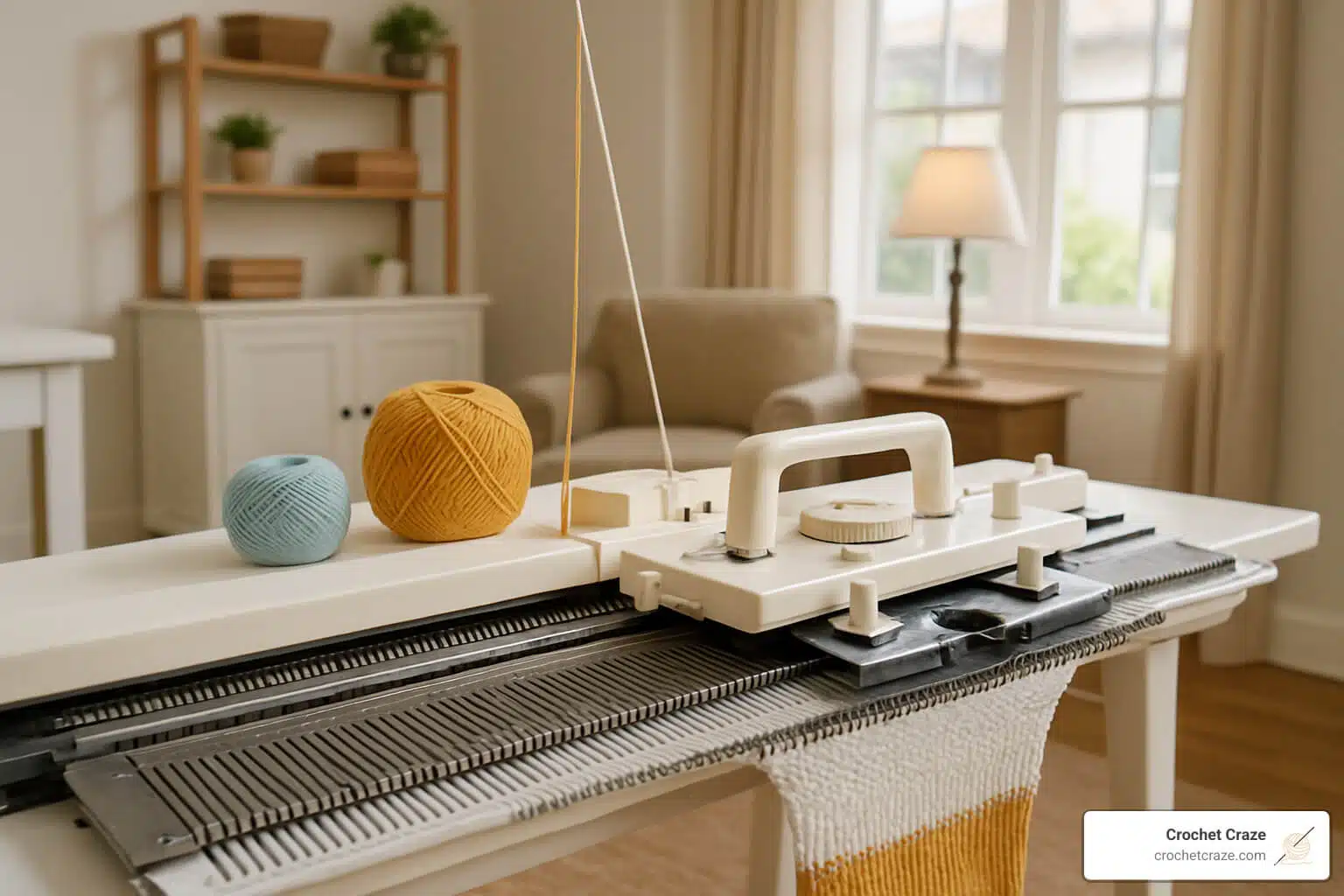
A double bed knitting machine is a specialized knitting system that uses two needle beds working together to create fabrics impossible on single-bed machines. These remarkable machines represent the pinnacle of home knitting technology, bridging the gap between hand knitting and industrial production with precision that consistently amazes both beginners and experienced crafters.
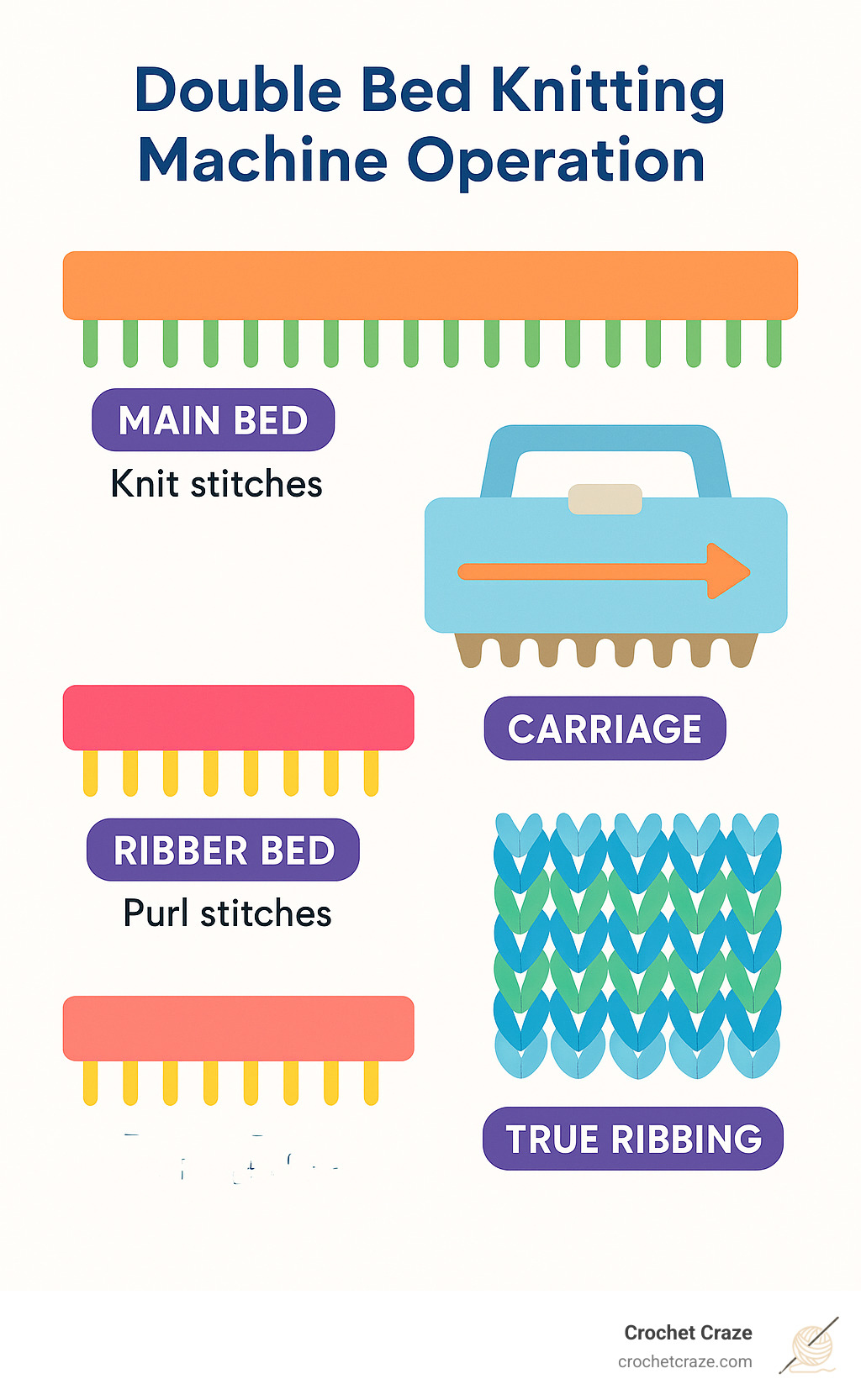
The magic happens when two needle beds work in perfect harmony. The main bed handles your knit stitches while the ribber (the second bed) creates purl stitches, allowing both to occur in the same row. This coordination opens up a world of possibilities that would take hours to achieve by hand, if they’re even possible at all.
Key Benefits:
• True ribbing – Creates professional 1×1, 2×2 ribs without hand manipulation
• Double jacquard – Produces thick, reversible colorwork with no long floats
• Circular knitting – Knits seamless tubes for socks, sleeves, and hats
• Faster production – Approximately 200 needles per bed enable wide fabric creation
• Professional results – Achieves stitch patterns that mimic expensive commercial knitwear
• Fabric stability – Eliminates the curling edges common with single-bed stockinette
• Texture variety – Creates fisherman’s rib, garter stitch, and complex cable patterns
• Time efficiency – Reduces project completion time by 60-80% compared to hand knitting
The versatility of these machines extends far beyond basic knitting. You can create everything from delicate baby blankets with intricate lace patterns to chunky winter sweaters with complex colorwork. The ability to switch between different techniques on the same machine means your investment grows with your skills and interests.
Popular Models:
– Brother KH260/KR260 (bulky 9mm gauge, 114 needles)
– Silver Reed SK840 + SRP60N (standard 4.5mm, electronic patterning)
– Taitexma TH860L (extended bed, 272 needles)
– Passap E6000 (Swiss engineering, advanced electronics)
– White/Superba machines (French precision, unique stitch effects)
As one experienced knitter shared: “Do you remember the exhilaration you felt when you first began your machine knitting trip?” That excitement doubles when you find what these machines can create. The learning curve might seem intimidating at first, but most knitters find themselves creating professional-quality pieces within just a few weeks of practice.
The main difference from single-bed machines is the addition of a ribber attachment. This second needle bed works opposite the main bed, allowing both knit and purl stitches in the same row. Most standard gauge machines feature 200 needles per bed with 4.5mm spacing, perfect for fingering and sport weight yarns. This configuration provides enough width to create adult-sized garment pieces in single panels, eliminating the need for complex seaming.
What truly sets double bed machines apart is their ability to create fabric structures that are simply impossible on single beds. True ribbing emerges automatically as the carriage passes across both beds, with no need for the tedious needle transfers required on single-bed machines. The fabric comes off the machine ready to wear, with professional-looking edges and perfect stitch definition.
I’m Sonja Huerta, and while I’m new to crochet, I’ve been fascinated by the precision and versatility that double bed knitting machines offer to serious crafters. My attention to detail and patience have helped me appreciate how these machines bridge the gap between hand knitting and industrial production. The engineering that goes into coordinating two needle beds simultaneously is truly remarkable, and the results speak for themselves in the quality of fabric these machines produce.
The investment in a double bed knitting machine pays dividends in both time savings and creative possibilities. While the initial learning period requires patience, the long-term benefits include faster project completion, professional-quality results, and access to techniques that would be extremely difficult or impossible to achieve by hand. For serious knitters who want to expand their capabilities while maintaining the satisfaction of creating handmade items, these machines represent the perfect balance of technology and craftsmanship.
How a Double Bed Knitting Machine Works & Why You’ll Love It
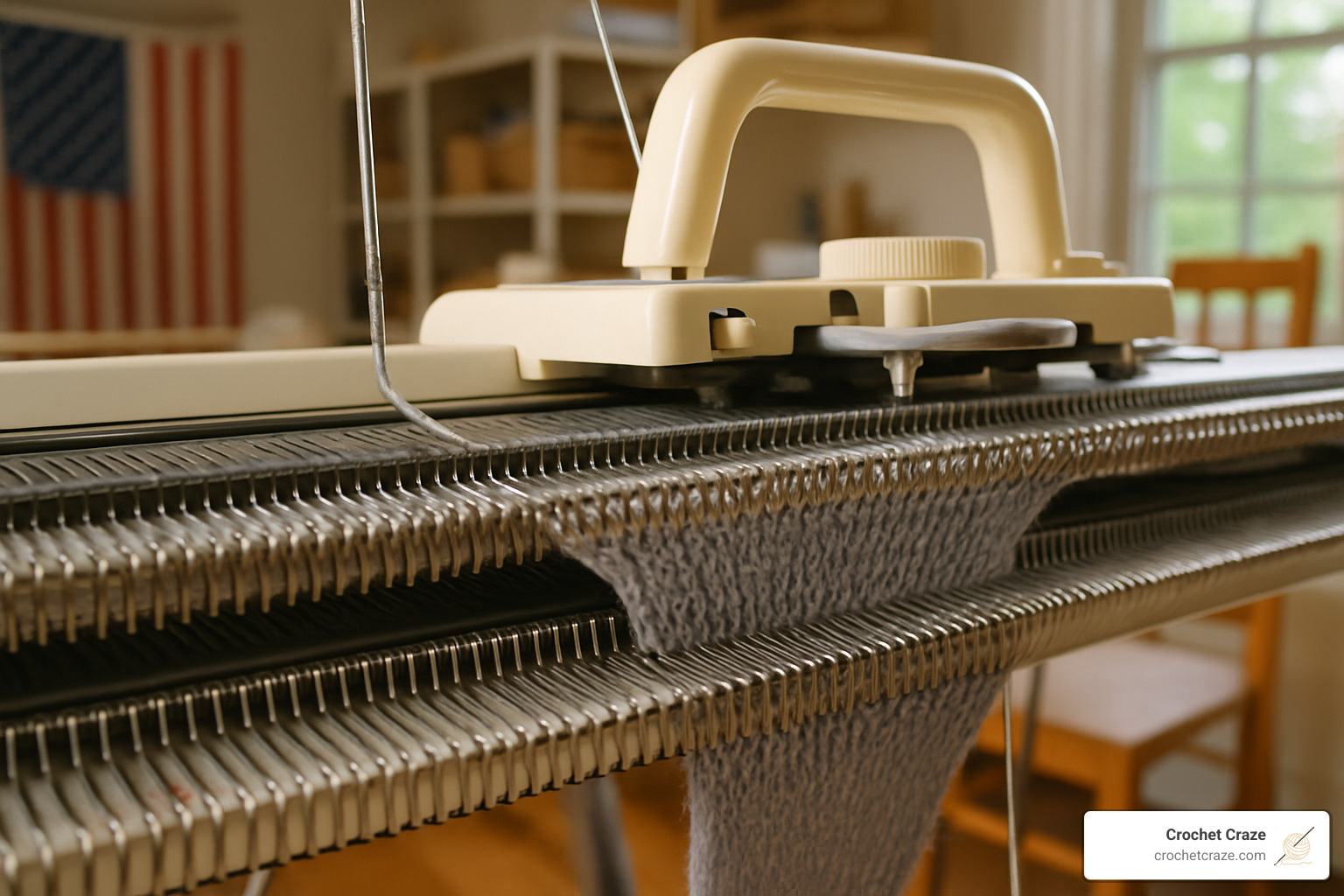
Think of a double-bed machine as two perfectly synced looms. The main bed forms knit stitches while the ribber bed inserts purls at the exact same moment, so you get professional ribbing, reversible fabrics and seamless tubes in a single pass.
Why it feels like magic:
• True 1×1 or 2×2 ribs appear automatically – no hand transfers.
• One sweep of the carriage can knit circular tubes for socks, hats or sleeves.
• Needle selection on both beds lets you tackle tuck, slip, cables and fair-isle without long floats.
Single vs. Double at a Glance
Single-bed units excel at basic stockinette and lace, but edges curl and ribbing requires tedious manipulation. Add the ribber and you gain:
• Flat, stable fabric right off the pins.
• Up to 60-80 % faster production on garments.
• Professional texture options that hand-knitters spend weeks on.
Core Parts You’ll Meet
Carriages – one for the main bed, one for the ribber – push cams that tell each needle when to knit or rest.
Tension mast & yarn stand – feed one or several colours smoothly.
Weights/combs – keep stitches anchored so nothing drops.
Colour changer – swaps yarns automatically for jacquard or stripes.
Master these basics and the more advanced tricks fall naturally into place.
Buying Guide: Gauges, Brands & Must-Have Features
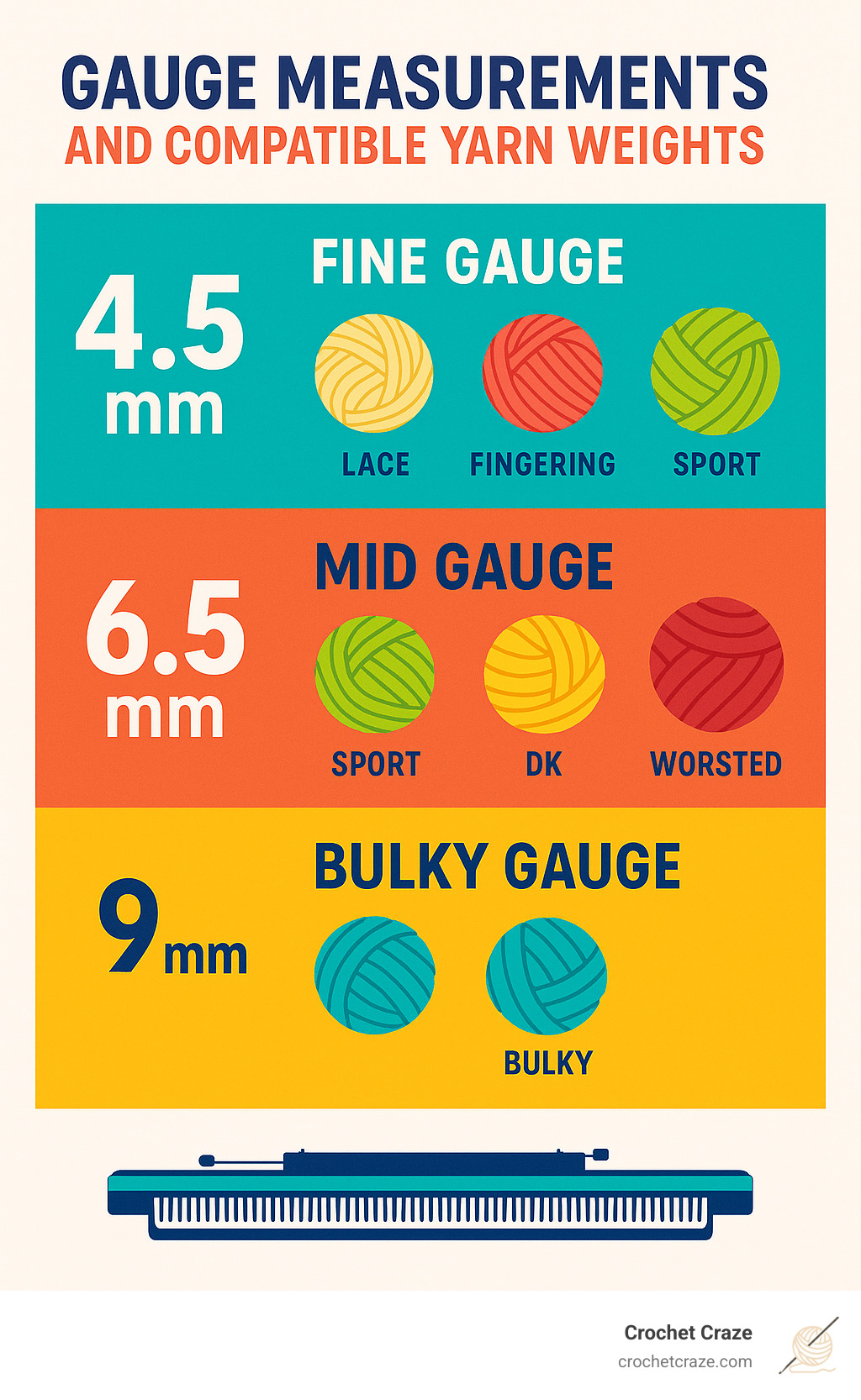
Gauge determines which yarns you can use:
• 4.5 mm standard – lace to sport weight; neat, custom garments.
• 6.5 mm mid-gauge – sport through worsted; the all-rounder.
• 9 mm bulky – chunky yarns; instant scarves and blankets.
Pick the gauge that matches the yarn dominating your stash – you can always hold two finer strands together on a bulky bed but you can’t force super-thick yarn through a standard one.
Leading Brands in a Nutshell
• Brother – discontinued yet plentiful; famous punch-card reliability.
• Silver Reed – still in production; computer-friendly SK840.
• Passap – Swiss precision for complex double jacquard.
• Taitexma – budget-friendly & extra-wide beds.
• White/Superba – French machines with unique stitch effects.
When comparing models, look beyond sticker price: parts supply, user communities and learning resources all affect long-term value. For an overview of flat-bed alternatives, see our full guide at https://crochetcraze.com/flatbed-knitting-machines/.
Best Double Bed Knitting Machine Picks for Every Budget
Choosing is easier when you match machine to goal and wallet. Below are four proven combos that keep showing up in workshops and online groups alike.
Brother KH260/KR260 (Bulky 9 mm)
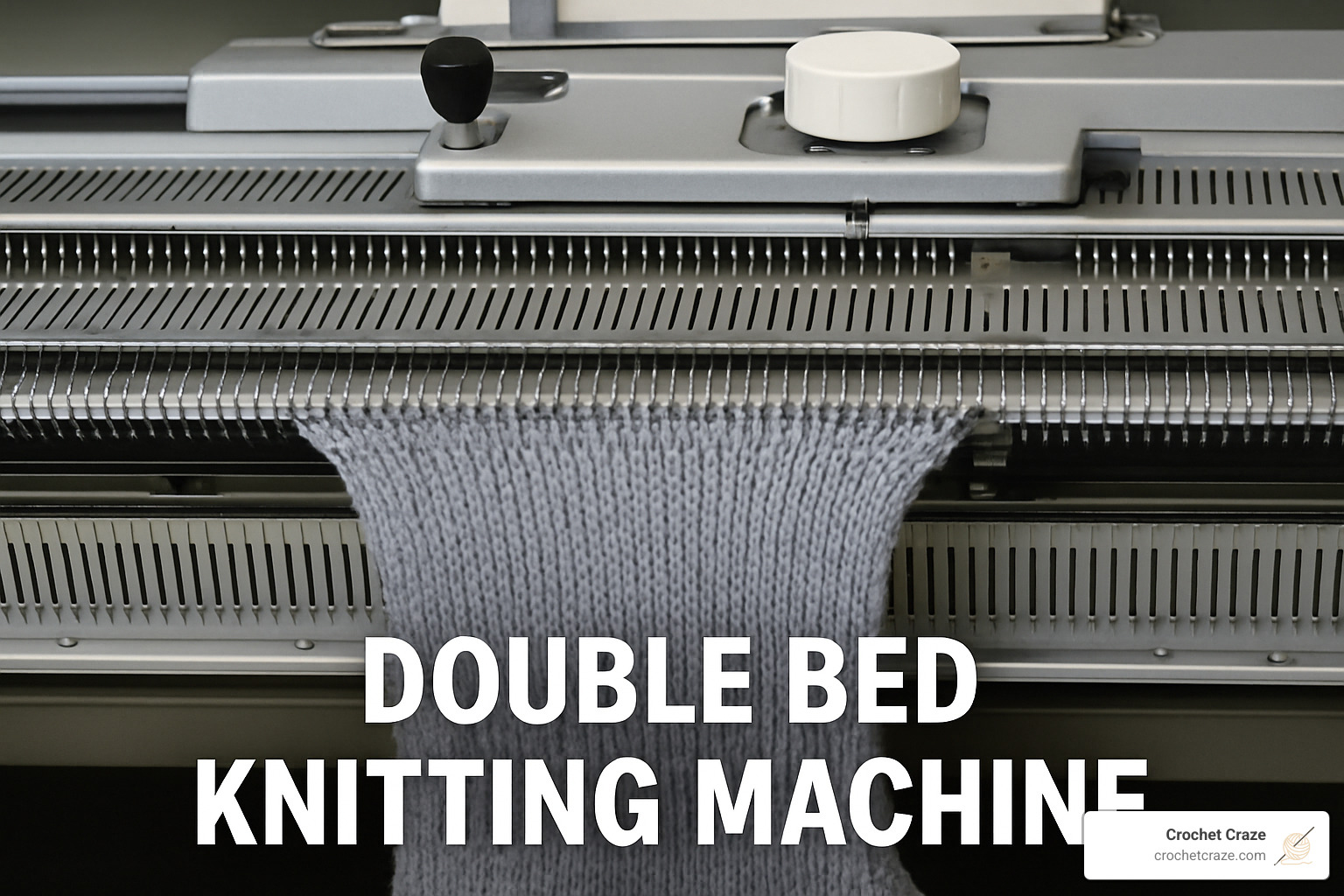
Punch-card patterning, cast-iron durability and 114-needle width make this the speed-knitter’s dream for chunky winter wear. No electronics means less to break and parts remain easy to source.
Silver Reed SK840 + SRP60N (Standard 4.5 mm)

Hook it to DesignaKnit software and release unlimited-width lace or colourwork. Ongoing factory support makes it the safest long-term electronic investment.
Taitexma TH860L/TR850L (Extra-wide 4.5 mm)
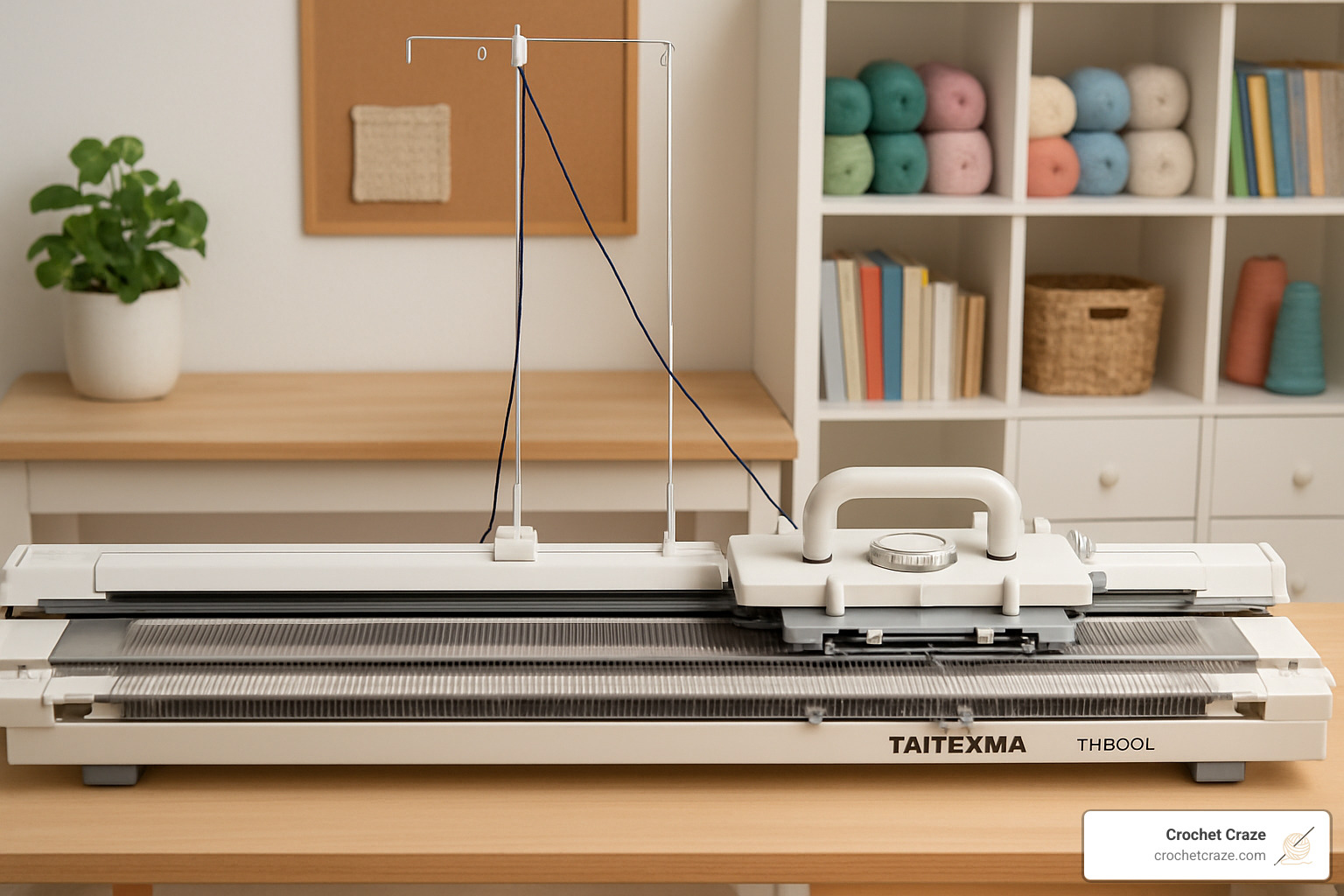
A 48-inch, 272-needle bed means single-panel blankets and ponchos with no side seams. Affordable punch-cards keep setup simple while the extra width delights designers.
Passap E6000 (Standard 5 mm)
The Swiss flagship for tech lovers: stored patterns, true circular knitting and unrivalled double-jacquard depth. There’s a learning curve, but the payoff is gallery-quality fabric.
Advanced Techniques, Maintenance & Resources
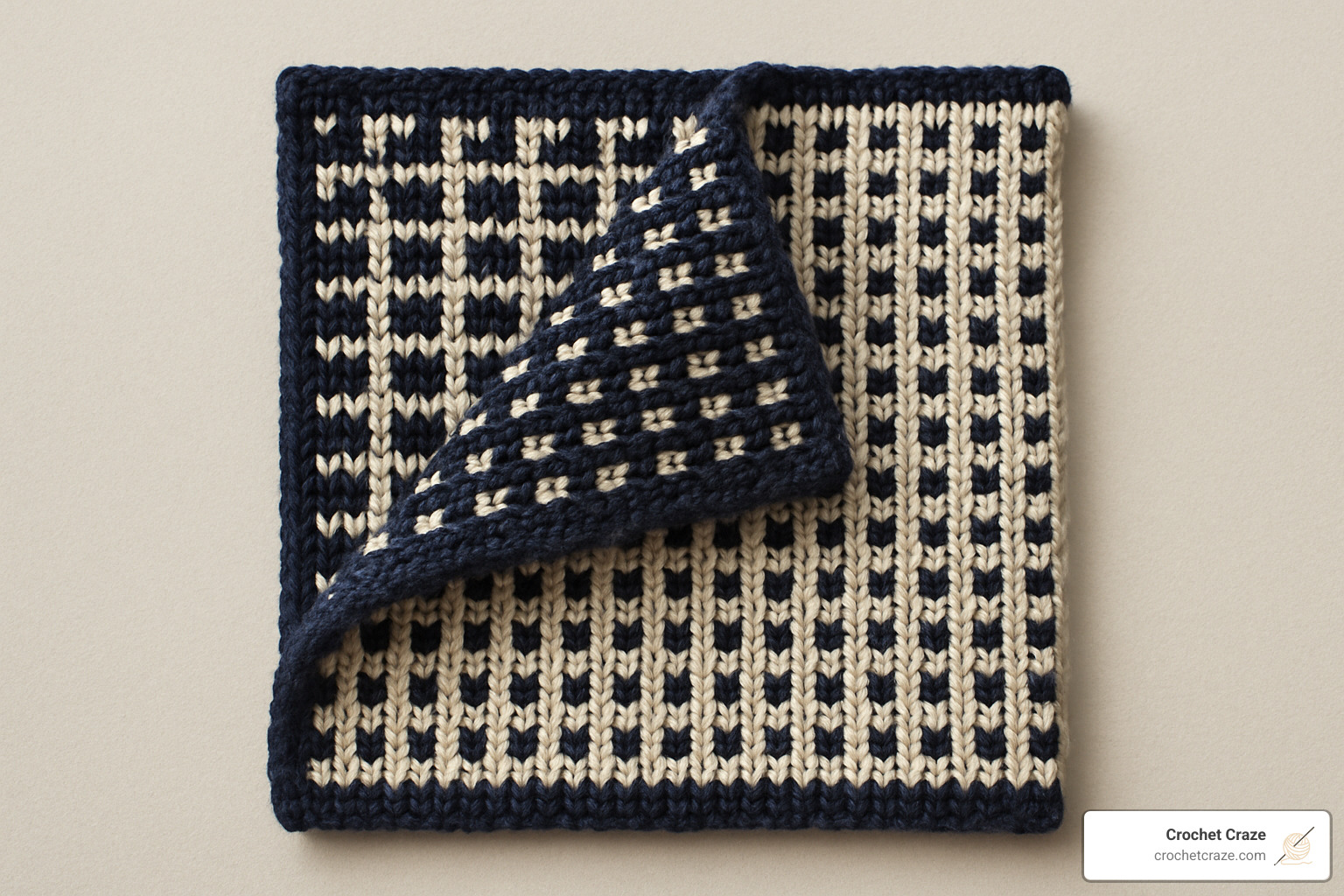
Once basic ribbing feels easy, explore:
• Double jacquard – reversible colourwork with no floats. Use a colour changer every two rows for speed.
• Fisherman’s rib – extra-plush texture ideal for scarves.
• Ladder-back tweak – move two needles to the main bed, leave one on the ribber; fabric stays lighter yet still double-sided.
Quick upkeep keeps any machine humming for decades:
1. Wipe the beds and add two drops of light machine oil after every project.
2. Replace the sponge bar yearly; a flat bar causes dropped stitches.
3. Inspect needles – polish minor rust with fine steel wool, replace bent ones immediately.
Find more step-by-step demos in our technique library: https://crochetcraze.com/category/techniques/
Frequently Asked Questions about Double Bed Knitting Machines
What gauge suits me?
Go with the yarn you buy most. Fingering → 4.5 mm, DK/worsted → 6.5 mm, chunky → 9 mm.
Electronic or punch-card?
Electronic = unlimited pattern width and computer design; Punch-card = bomb-proof mechanics and no software needed. Choose the workflow you’ll actually enjoy.
Is the learning curve scary?
Expect a weekend to knit basic ribbing and a month of casual practice to feel confident. Online groups and video classes shorten the journey.
Maintenance – hard or easy?
Five-minute wipe, oil and needle check after each project does 90 % of the job. Annual sponge-bar and an occasional deep clean keep things factory-smooth.
Conclusion
Choosing your first double bed knitting machine marks an exciting turning point in your crafting journey. These remarkable machines open doors to techniques that would take hours by hand – from professional ribbing to stunning double jacquard colorwork.
The beauty of double bed knitting lies in its versatility. Whether you’re drawn to the robust Brother KH260 for quick bulky projects, the sophisticated Silver Reed SK840 for delicate lacework, the value-packed Taitexma TH860L for extra-wide fabrics, or the versatile Passap E6000 for advanced techniques, each machine offers unique strengths that can transform your crafting.
At Crochet Craze, we know that stepping into machine knitting can feel overwhelming at first. The array of gauges, brands, and features might seem daunting. But here’s what we’ve learned from countless crafters who’ve made this leap: the key is starting where you are and growing from there.
Think about the projects that excite you most. Do you dream of cozy chunky scarves? A bulky gauge machine might be perfect. Are you fascinated by intricate colorwork patterns? An electronic system with computer connectivity could be your ideal match. Want to knit seamless socks and sweater sleeves? Look for machines with excellent circular knitting capabilities.
These machines represent long-term investments in your creativity. With proper care and maintenance, a quality double bed knitting machine can serve you faithfully for decades. The initial learning curve might feel steep, but most knitters find themselves comfortable with basic operations within just a few weeks of regular practice.
Start simple. Master basic ribbing before attempting complex double jacquard. Join online communities where experienced machine knitters share tips and troubleshoot problems together. Most importantly, be patient with yourself as you learn.
As one enthusiastic knitter we quoted earlier asked: “Do you remember the exhilaration you felt when you first began your machine knitting trip?” That excitement multiplies when you find what becomes possible with two needle beds working in harmony.
Your double bed knitting machine trip starts with a single decision. Choose the machine that matches your goals, set up your workspace, and prepare to create fabrics that will amaze your friends and family. The techniques you’ll master and the projects you’ll complete will make every moment of the learning process worthwhile.
For even more advanced techniques to explore with your new machine, visit our comprehensive techniques guide. Your journey into professional-quality machine knitting begins today.